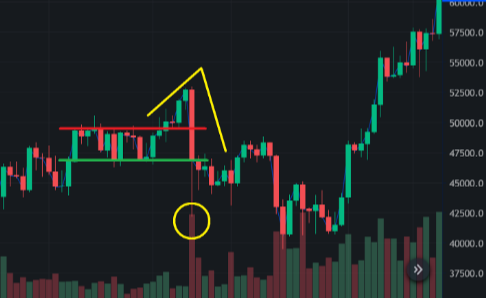
Tracking crypto trends hinges on robust indicators, disciplined risk controls, and timely on-chain context. The approach blends price action with volume and volatility signals, while monitoring fund flows and network activity for divergences. Social sentiment and news are weighed against hard data to separate noise from signal. A repeatable system enforces confirmation rules and risk thresholds, then visualizes actionable signals and prompts portfolio adjustment. The framework invites scrutiny and refinement as market dynamics evolve.
What Trends in Crypto Really Mean
Trends in crypto reflect a mix of momentum, fundamentals, and sentiment, rather than a single causal factor.
The interpretation centers on how risk alignment shapes behavior and liquidity signals reveal execution capacity.
Observers note correlations between capital inflows, funding rates, and network activity, but causation remains nuanced.
Clear signals emerge from disciplined data analysis, not noise, guiding disciplined, freedom-oriented decision makers.
Read Price Charts Like a Pro
Reading price charts like a pro requires separating signal from noise and anchoring analysis in verifiable data. Analysts examine price action, volume, and volatility to identify repeatable patterns. Trend indicators guide entry and exit decisions, while chart psychology explains trader behavior during moves. Clear criteria reduce bias, enabling disciplined risk management and objective evaluation of evolving market conditions without conflating noise for trend.
Decode On-Chain Signals and Social Sentiment
Decoded on-chain signals and social sentiment offer a complementary view to price data, capturing network activity, fund flows, and collective mood that precede or reinforce trend shifts.
Decentralized metrics quantify activity and health, while social momentum tracks consensus shifts.
Analysts compare on-chain flow with social chatter to identify divergence, confirm breakouts, and anticipate reversals, supporting disciplined, data-driven decisions for freedom-minded traders.
Build a Repeatable Tracking System With Risk Controls
To establish a repeatable tracking system, practitioners define a structured workflow that combines quantitative signals, risk controls, and documented decision rules.
The framework employs trend indicators and robust risk frameworks, anchoring decisions to predefined thresholds.
Data visualization clarifies signals, while portfolio rebalancing routines translate insights into allocations.
This approach supports disciplined, transparent, freedom-oriented monitoring and continuous improvement of crypto trend assessments.
Read also: Mobile Gaming Evolution
Frequently Asked Questions
How Often Should I Recalibrate My Tracking System?
recalibration cadence should be daily to weekly, depending on market volatility, ensuring indicator discipline remains intact; the system recalibrates when data streams shift beyond predefined thresholds, preserving consistency while allowing freedom to adapt to changing trends.
What Sources of Noise Should I Filter Out?
Noise sources to filter include market microstructure quirks and bot-driven spikes; data granularity matters, so avoid over-aggregation. Like a careful navigator, the system discards transient fluctuations, delivering cleaner signals for those seeking freedom in informed decisions.
Can I Rely on a Single Indicator for Decisions?
A single indicator is insufficient for decisions; indicator limitations necessitate corroboration. Diversification benefits arise from combining metrics, reducing noise and overfitting. The approach favors freedom through robust, multi-source validation, rather than reliance on one solitary measure.
How Do I Measure Risk-Adjusted Performance?
“Nothing ventured, nothing gained.” The analysis references risk adjusted performance metrics, diversification importance, backtesting rigor, volatility vs. drawdown, and Sharpe ratio interpretation; it notes beta vs. alpha, normalization techniques, time frame sensitivity, data integrity checks, and transaction cost impact.
What Are Common Cognitive Biases in Crypto Tracking?
Cognitive drift and confirmation bias frequently distort crypto tracking, causing selective interpretation of data and overconfidence. Analysts should document assumptions, seek counter-evidence, preregister criteria, and rely on diverse, transparent datasets to preserve analytical freedom and reduce bias.
Conclusion
Crypto trends emerge from a disciplined blend of price action, on-chain signals, and sentiment. A robust system separates noise from signal using trend, volume, and volatility metrics, then confirms breakouts with defined thresholds and risk controls. An interesting stat: during recent cycles, significant trend moves often preceded by a 20–30% drawdown, followed by a quick 2–3x recovery in altcoins. This pattern underscores the value of pre-set rules and continuous monitoring over ad-hoc intuition.