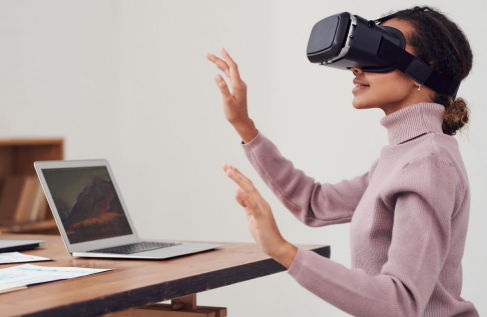
Mixed reality reshapes digital collaboration by anchoring digital artifacts to physical context. Teams share spatially aware work surfaces and manipulate tangible prototypes alongside immersive data. This approach emphasizes interoperability, scalable data pipelines, and governance. As tools mature, onboarding and security become core design constraints, guiding workflow architectures and vendor choices. The potential for cross-disciplinary problem solving is clear, yet practical implementation raises questions about standardization, vendor lock-in, and the governance models that will sustain productive, autonomous collaboration.
How Mixed Reality Elevates Digital Collaboration
Mixed reality (MR) elevates digital collaboration by blending physical context with immersive digital content, enabling participants to interact with shared artifacts as if they occupy the same space.
MR reframes coordination through mixed reality collaboration, aligning teams around tangible prototypes and contextual data.
This shift supports immersive workflow design, encouraging adaptive problem-solving, transparent feedback, and interdisciplinary, forward-thinking exploration of potential processes.
Choosing the Right XR Tools for Your Team
Selecting appropriate XR tools requires a structured evaluation of how hardware, software, and data workflows align with team goals, project scope, and collaboration practices.
The analysis emphasizes interoperability, scalability, and user autonomy, enabling cross-disciplinary decision making.
Consider workflow compatibility, platform stability, and vendor support.
Practical criteria include font pairing, color grading, training needs, and change management to sustain creative, forward-looking collaboration.
Designing Immersive, Context-Rich Workflows
Designing immersive, context-rich workflows requires a precise alignment of sensory immersion, data fidelity, and collaboration logic. Analysts frame these systems as modular, interoperable pipelines that sustain focus while enabling adaptive collaboration. Immersive onboarding accelerates competence, reducing friction across roles. Contextual workflows bundle relevant data, tools, and cues, supporting autonomous teams and freedom to explore creative solutions within disciplined, measurable processes.
Ensuring Security, Onboarding, and Productivity Balance
Onboarding efficiency emerges as a lever for trust, while interdisciplinary metrics guide sustainable productivity, empowering users without compromising integrity or autonomy in future-ready ecosystems.
See also: Mobile Gaming Evolution
Frequently Asked Questions
How Do XR Experiences Scale for Large Enterprise Deployments?
The question is answered: scalable architecture enables vast deployments, ensuring enterprise readiness and manageable costs, while collaboration impact scales through standardized protocols, governance, and interoperable tools, allowing autonomous teams to innovate within a secure, forward-looking, cross-disciplinary framework.
What Are Cost-Effective Pilot Strategies for MR Adoption?
A hypothetical factory case demonstrates low cost pilots delivering measurable gains; organizations should leverage modular deployments with rapid feedback. This approach enables low cost pilots and user ready onboarding, encouraging experimentation, cross-functional analysis, and autonomous, forward-looking adoption.
How Is Accessibility Addressed in Mixed Reality Workflows?
Accessibility in MR workflows centers on conforming to accessibility standards and embracing inclusive design, enabling diverse users to engage. The approach is analytical, interdisciplinary, and forward-looking, granting practitioners freedom while rigorously evaluating usability, adaptability, and ethical implications.
Which Metrics Truly Indicate Collaboration Impact in XR?
The theory holds that no single metric suffices; metrics relevance emerges from triangulating collaboration signals, task efficiency, and user perception. In XR, robust insights arise when qualitative feedback aligns with objective data, guiding interdisciplinary, forward‑looking optimization.
How Do MR Tools Integrate With Existing Data Ecosystems?
MR tools integrate with existing data ecosystems by prioritizing data interoperability and governance, enabling seamless ingestion, transformation, and lineage tracking; they align workflows across domains, anticipate standards evolution, and empower stakeholders to pursue adaptable, liberty-centered analytical innovation.
Conclusion
Mixed reality reshapes collaboration by tethering digital artifacts to physical context, enabling shared, context-rich workflows. As teams integrate tangible prototypes with immersive data, interoperability, governance, and scalable pipelines become the backbone of productive, secure collaboration. The future lies in modular, MR-supported processes that adapt across disciplines, balancing onboarding efficiency with robust vendor ecosystems. Yet the promise hinges on disciplined design and transparent data flows. By embracing a chorus of evidence and foresight, MR invites collaborative clarity—like a lighthouse guiding distributed teams through fog.