Crypto market predictions rely on disciplined interpretation of price action, fundamentals, and on-chain signals. Analysts weigh liquidity cues, chart formations, and macro flows to ground forecasts in observable drivers rather than crowd sentiment. They structure scenarios, apply explicit models, and set risk controls to translate insight into actionable plans with clear stop criteria. The approach remains adaptable, with assumptions continually validated, leaving room for evolving conditions and data-driven thresholds that merit continued scrutiny.
How to Read Crypto Price Action Like a Pro
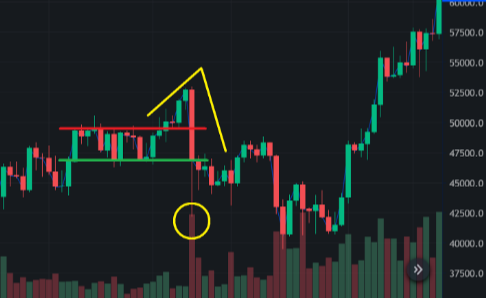
Reading crypto price action requires focus on concrete signals and context rather than speculative zeal. The analysis centers on price action cues, chart patterns, and liquidity dynamics to identify probable moves with discipline. Sentiment indicators gauge crowd tone without overreacting. Data-driven methods emphasize risk controls, defined thresholds, and reproducible observations, supporting independent decisions while preserving freedom to adapt to evolving market conditions.
Key Drivers: Fundamentals, On-Chain, and Macro Flows
Fundamentals, on-chain activity, and macro flows together shape crypto market dynamics by anchoring price moves to observable drivers rather than speculative sentiment alone. A fundamentals deep dive reveals how asset utility, network activity, and funding rates correlate with value signals.
Macro sentiment remains a constraint, guiding risk appetite.
Analysts monitor liquidity, token velocity, and cross-market flows for disciplined, data-driven assessments. cautious, freedom-minded readers.
Forecasting Frameworks: Scenarios, Models, and Risk
Forecasting in crypto relies on structured scenarios, explicit models, and defined risk controls to translate uncertain dynamics into actionable assessments.
The framework blends scaling narratives with quantitative inputs, emphasizing volatility metrics and scenario plausibility.
It remains cautious, data-driven, and transparent, outlining assumptions, limitations, and trigger thresholds.
Decisions rely on disciplined validation, continuous monitoring, and clear risk appetites within evolving market conditions.
From Insight to Action: Trading Plans and Risk Controls
From the established forecasting framework, practitioners translate insights into concrete trading plans and explicit risk controls. In this phase, teams perform structured insight synthesis to convert probabilistic outputs into actionable rules, position sizing, and stop criteria. Risk budgeting governs capital allocation, ensuring exposure aligns with scenarios. Decisions remain transparent, data-driven, and disciplined, prioritizing adaptability over rigidity to preserve freedom in volatile markets.
See also: How to Track Crypto Trends
Frequently Asked Questions
How Do Taxes Impact Crypto Market Predictions and Profitability?
Tax treatment and accounting standards influence crypto market predictions and profitability by shaping reported gains, losses, and risk assessments; they introduce delay, complexity, and compliance costs, demanding cautious, data-driven analysis for investors pursuing freedom in decision making.
Which Time Horizon Best Suits Long-Term Crypto Forecasting?
The time horizon for long-term crypto forecasting favors multi-year spans, balancing cycles and innovation. Time horizon choices impact forecasting accuracy; shorter frames inflate noise, longer ones improve signal but reduce actionable clarity in volatile markets.
Do Social Sentiment Signals Reliably Forecast Price Moves?
Social sentiment offers partial foresight into price moves, yet data signals alone remain unreliable. Market psychology can shift abruptly; conclusions should be cautious, emphasizing robustness, cross-validation, and freedom from overreliance on any single indicator.
How Often Should You Rebalance a Crypto Portfolio?
Rebalancing cadence should be measured, not heroic, with quarterly reviews as a prudent default. It supports risk parity while avoiding overtrading; adjustments depend on volatility and goals, ensuring freedom through disciplined, data-driven portfolio stewardship.
What Fiduciary Considerations Apply to Crypto Investment Advice?
Fiduciary considerations for crypto investment advice require adherence to fiduciary duties and conflict avoidance; providers must disclose material risks, minimize conflicts, document processes, maintain due care, and act in clients’ best interests while independent, transparent, and data-driven.
Conclusion
In a detached, data-driven light, the market resembles a wind-ruffled sea: price action tugs like stubborn currents, fundamentals anchor ships, and on-chain signals shimmer as lighthouses. Forecasts unfold as tight lattices of scenarios and models, each with explicit risk thresholds. Traders translate insights into plans, pruning exposure with disciplined stops, and revising assumptions as macro flows shift. The result is a cautious, adaptable tableau—observable, measurable, and continually validated against evolving data.